
 What’s great about the online gambling industry is that it’s both huge and diverse. When it comes to game production, there are over 350 software developers that are cranking out slots, table games and other casino games for players around the world to enjoy. Some of these have been around since the first online casinos were launched in the late 90s. Others are even older, having first specialised in creating games for land-based casinos. Then there are lots of newer ones that have only been working for a few years.
The hundreds of developers have released over 16,000 slots among them. It’s safe to say that there are many slots that are similar to one another. While slots do come in a wide range of themes and have lots of different features, it’s not difficult to find some that aren’t that different from one another.
So what makes certain developers stand out? While many have become successful because of the quality of their gaming content, it’s innovation that really makes a company earn recognition and stand apart from the rest. Some play it safe and stick to the tried and tested slots formula – they focus on consistent quality, rather than trying new things. Developers that have a back catalogue of land-based slots concentrate on adapting these for the online market. Aristocrat, IGT, Novomatic and Barcrest are a few examples of developers that create high-quality online slots, but don’t really push things forward.
Developers I Prefer
There are several developers that stand out because they push boundaries. They introduce new features to online slots and make them more varied and compelling than before. If it weren’t for developers introducing new innovations, slots would be the same and that would be boring. Thanks to innovations, the world of online slots is exciting and unpredictable – you can never guess what big new feature is going to be unveiled next. Here’s a run-down of several preferred developers that have made waves in the industry for introducing exciting new features.
- Big Time Gaming. Back in 2016, Big Time Gaming took the online slots world by storm when it released the mining-themed slot Bonanza. This slot introduced a brand new concept: Megaways. The way this works is as follows: the slot has six reels and on every spin, each reel can have two to seven symbols on it. You win by landing matching symbols on consecutive reels left to right. Every spin of the reels can give you thousands of ways to win. If all six reels have seven symbols on them, there are a huge 117,649 ways you can win. Big Time Gaming has launched several Megaways slots and has licensed the feature for other developers to use. It’s soon launching a similar feature: Megaclusters. This has all winning symbols replaced by four separate reels each, giving you even more chances of winning.
- Microgaming. Microgaming is widely credited with launching the world’s very first online casino software. It’s also responsible for the very first mobile slots and is behind the world’s biggest-paying progressive jackpot slot: Mega Moolah.
- BetSoft. What makes BetSoft stand out is its focus on the graphical presentation of its slots. The developer’s most recent slots are designed with immersive, eye-catching 3D graphics. They’re a lot more cinematic than other slots and are highly detailed, with well thought out storylines and fleshed out characters, not to mention plenty of special features.
- NetEnt. NetEnt is an all-round developer that produces practically every type of online casino game. In 2016, it released the Hawaiian-themed slot Aloha! Cluster Pays. What this slot introduced was the Cluster Pays mechanic – instead of winning on paylines, you win by forming clusters of nine or more matching symbols that are touching horizontally or vertically.
Summary
There are loads of developers creating slots. The ones I prefer are those that try to do something new, whether it’s improving the visual quality of slots or introducing exciting new gameplay mechanics. These innovative providers help keep slots interesting and are worth following. With technology advancing so much these days, you never know what certain providers have hidden up their sleeve waiting to unleash to the world.
 There is no doubt that online casinos have one huge (or should I call it
  Being glamorous has nothing to do with convenience, though! Going to a land-based casino requires much more effort such as dressing up, taking the time to go and following a set of etiquette rules when playing. But then again, betting the old-school style comes with a bunch of high-profile and socializing aspects. It’s а whole different vibe. You can communicate with the dealer or your table mates, drink an expensive whiskey, make it an exciting night out. There’s no doubt, it’s definitely much more time-consuming and expensive than online wagers but I would compare it to eating at a fancy restaurant once in a while to feel extra special, enjoy the polite service, and taste gourmet dishes. Of course, cooking your comfort food at home every evening it’s super nice as well, but then again, the occasional treat helps us appreciate the ordinary even more.
 And my answer is absolutely NO! So, if you have any inbuilt bias, I’ll kindly ask you to leave them at the door. My personal story is the perfect evidence that gambling is so much more than a modern addiction which leads to troubles only. In fact, betting has cast all my demons out and has provided me with a fresh new start. For that reason, I felt like I needed to at least try and switch the perspective of those of you believing that there is nothing but negativity in gambling. So, before starting with the in-depth casino related topics here is my most dedicated attempt to make you see how everything has a positive and a negative side and it’s totally up to us which one we’ll acknowledge or how we will find the perfect balance between good and bad.
 I know what you’re going to say now! What about games like slots and roulette which have nothing to do with your skills but with odds only? And in fact, they have quite the opposite effect on your brain. Not only will they make you think less but can also trick you into believing that randomness follows some kind of a pattern which might be absolutely mind-blurring. This is the risk, though, and as I said above, risks can never be avoided, they should be balanced instead. We all know that moderation is the key and to train moderation, chance-based games are the perfect exercise. They challenge us to develop self-discipline, to make clear judgments or to put it in other words – to play only as long as we can afford it. Managing your bankroll includes knowing when to walk away from a game, never going in with all your hopes or savings – all things that are a valuable lesson not only in gambling but in life in general. The power of self-control is a habit and the secret of our success depends on how well we have instilled that habit into our lives.
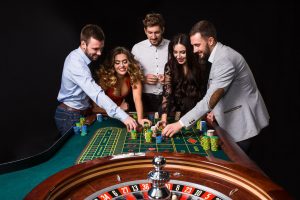 The idea for this blog is simple! Gambling saved me back in the days when I felt lost and totally abandoned by luck! Odds and bets became a true passion which not only proved me wrong that I wasn’t good enough in anything but also helped me pay for my college degree for good 4 years. Now I have a well-paid job in a fancy office, two beautiful kids and a lovely wife waiting for me to come home. Thinking about what my alternative life would have looked like if I haven’t accidentally discovered the joy of gambling, makes me so grateful and I feel determined to pay tribute to my saviour! I know that my defending mechanism when it comes to gambling seems weird to most of my close friends and family, but I will dedicate my efforts completely towards protecting my right to find the positive in something that the whole world labels as bad! After all, diversity is what makes planet earth such a colourful place! I’d love to share with you my personal stories, favourite games, as well as the latest updates, platforms, strategies on how to make the most out of your gameplay, and any other topic that might be interesting to you. I’ll do it with the greatest joy, so I hope to see you back around.